Ergonomics & Hygiene 2026 Speakers
Insights from the Leading Minds in Workplace Health and Safety
19 & 20 August 2026 – Devan Nair Institute for Employment and Employability, Singapore
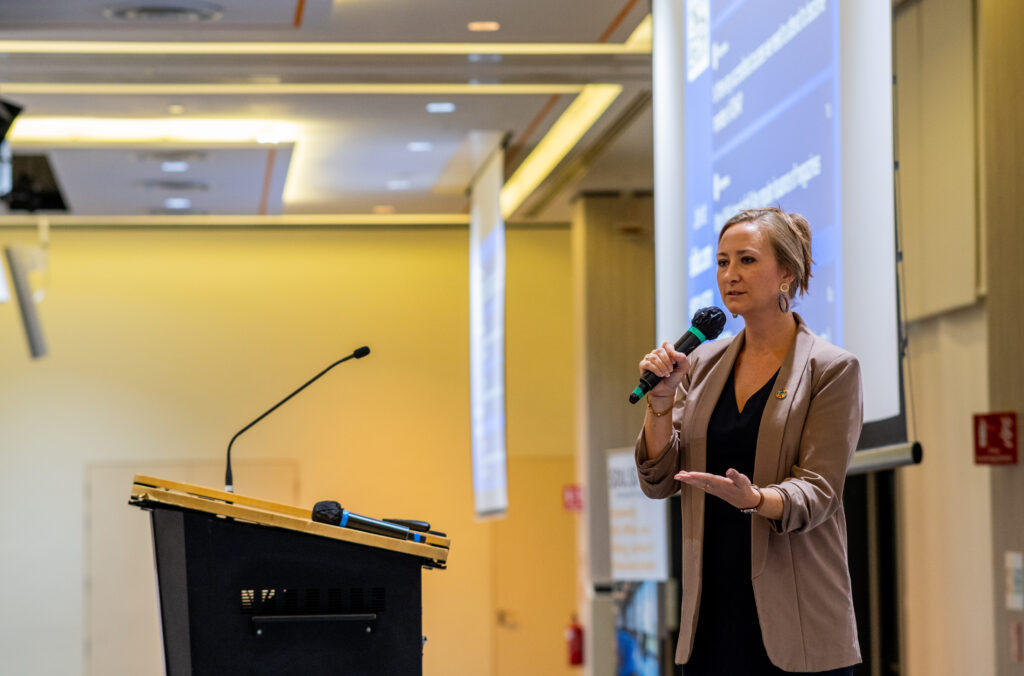
Samantha Connell, 2024 Keynote Speaker
IOHA Past President (2023-2024)
Confirmed Speakers
Leading voices shaping the future of workplace health. More speakers to be announced.
Keynote Perspectives
Distinguished voices setting the direction for practical, human-centred applications of AI and workplace health.
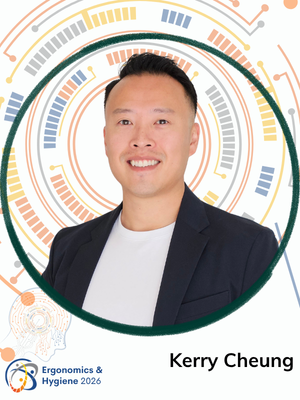
Kerry Cheung
Kerry Cheung brings an important international perspective to EH Conference 2026, reflecting on how occupational hygiene professionals can respond thoughtfully and responsibly to rapid technological change.
His keynote session, Practising AI Ethically in Occupational Hygiene, will explore how innovation can be translated into meaningful workplace impact while preserving ethics, professional judgement and worker-centred practice.
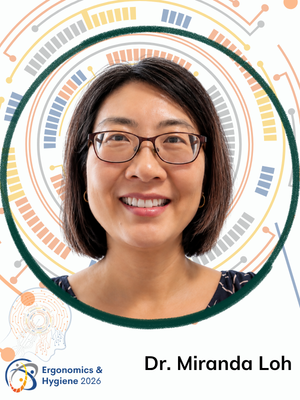
Dr. Miranda Loh
Dr. Miranda Loh brings a leading public health research perspective to EH Conference 2026, examining how technology, work transformation and emerging occupational risks are reshaping worker health.
Her keynote session, Occupational Health in Transition: Technology, Work, and Emerging Risks, will explore the changing world of work, digitally enabled employment models, and future research priorities for protecting worker health.
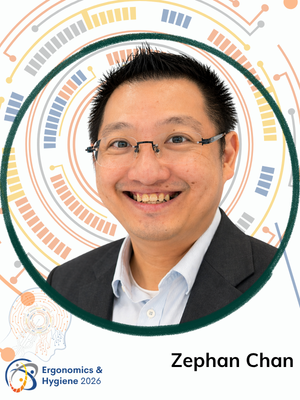
Zephan Chan
Zephan Chan brings a practitioner-led perspective to EH Conference 2026, connecting workplace safety and health practice with the practical adoption of AI in organisations.
His keynote session, Navigating AI in Workplace Safety and Health: From Potential to Risk and Real Impact, will examine how professionals can move beyond hype to apply AI responsibly, manage emerging risks, and create measurable workplace impact.
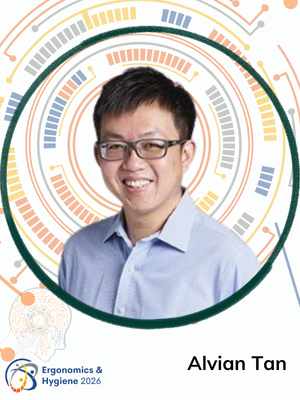
Alvian Tan
Alvian Tan’s keynote, The Changing Face of Workplace Exposure: Occupational Hygiene in an Era of Emerging Risks, will examine how occupational hygiene is evolving in response to climate change, new energy technologies, psychosocial stressors, novel chemical exposures and real-time digital exposure monitoring.
His session will make the case for a new generation of occupational hygienists equipped with broader competencies, sharper analytical tools and the confidence to influence decisions in the boardroom, at the design table and on the ground.
Panelists and Moderators
EH Conference 2026 will feature two dedicated panel discussions, bringing together experts and practitioners to exchange perspectives on workplace health, ergonomics, occupational hygiene and human-centred innovation.
Day 1 Panel Discussion by HFESS
Designing Workplaces That Work for People: From Data, Space, and Behaviour to Psychological and Social Wellbeing
Hosted by Human Factors and Ergonomics Society of Singapore
View Panel Details


Panel Discussion by OEHS
Hosted by Occupational and Environmental Health Society Singapore

Discussion Participants
The moderator and panelists will bring perspectives from occupational hygiene, exposure science, workplace health, emerging risks and industry implementation.
Designing Workplaces That Work for People: From Data, Space, and Behaviour to Psychological and Social Wellbeing
Session Description
This panel explores how workplace environments shape psychological and social health, and how emerging approaches in neuroscience, data analytics, architecture, and social psychology can be integrated to design better work experiences. As organisations continue to adopt hybrid work models, AI-enabled systems, and data-driven workplace strategies, there is an urgent need to understand not only how spaces are used, but how they affect human cognition, wellbeing, and social connection. Bringing together perspectives from neuroarchitecture, smart building analytics, workplace design practice, and social psychology, the panel will examine how physical environments and digital sensing technologies can be combined with human-centred design principles to create workplaces that are both measurable and meaningful. The session aims to bridge the gap between evidence, design practice, and lived experience, offering insights for researchers, designers, and practitioners working at the intersection of workplace health and design.

Kerry Cheung
Topic
Practising AI Ethically in Occupational Hygiene
Session Description
TBA
Speaker Profile
Kerry Cheung’s passion for occupational hygiene grew from his early research work at the Centre for Public Health Research, Massey University, where his hands-on approach brought him close with workers and the hazardous environments they navigated every day. That experience has driven a people-centred commitment to the profession spanning nearly two decades. From the healthcare sector in Canada to consulting across the Asia-Pacific, Kerry now serves as Principal Advisor Occupational Health at WorkSafe New Zealand, where he designs interventions to reduce worker illness and disease. He is a Certified Occupational Hygienist (COH)® and holds a Master of Work Health and Safety (Occupational Hygiene). Giving back to the profession, Kerry also volunteers as President-Elect of the International Occupational Hygiene Association (IOHA) and Secretary of the New Zealand Occupational Hygiene Society (NZOHS), where his focus is on raising the profile of the profession and strengthening professional standards globally.

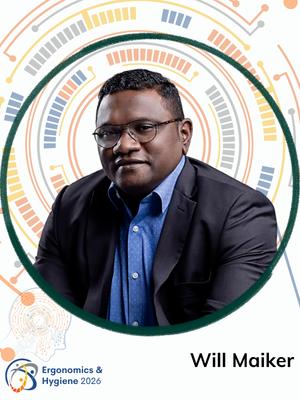
Will Maiker
Topic
Practitioner Playbook: Merging AI and HSE for Global Success
Session Description
TBA
Speaker Profile
As an accomplished Health, Safety, and Environment (HSE) Director, our distinguished global speaker brings a wealth of experience in navigating the diverse and challenging landscapes of occupational safety across numerous sectors. His expertise spans across industries like Railway, Construction, Manufacturing, and Facility Management. For more than two decades, he has demonstrated a strong commitment and dedication to cultivating a culture of safety and managing high-risk work environments effectively. They have played a pivotal role in reducing risks, improving HSE processes and tools, HSE Culture enhancement, managing HSE compliance, reducing downtime, and increasing operational efficiency in every organisation they have been part of. Having a robust educational background, with a Master’s degree HSE management, coupled with numerous professional certifications in the field of health and safety, he seamlessly blends theoretical knowledge with practical application. His global exposure, having worked across Asia, Europe, and the Americas, has enabled him to develop and implement effective HSE strategies specially on culture & technology that align with legislative requirements, industry standards, and ethical practices across different geographies. An effective communicator and a strategic planner, our speaker has the exceptional ability to navigate complex issues, negotiate with savvy, and lead teams with resolve and agility. He showcases an excellent record for managing key stakeholder relationships and building trust and rapport quickly and sustainably. His remarkable achievements in cultivating a safety-first culture, streamlining processes, and reducing accidents make them a highly sought after HSE executive and subject matter expert. As we delve into their experiences and insights today, we are certain to gain valuable perspectives that can revolutionize how we approach safety in our work environments.

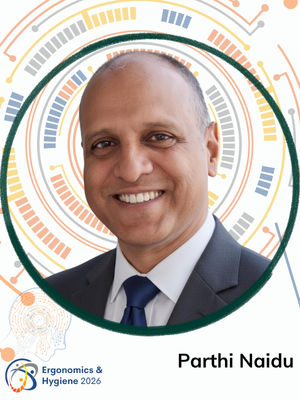
Parthi Naidu
Topic
Will AI Replace Safety Professionals? Not Sure – But It Will Change How We Work
Session Description
TBA
Speaker Profile
Parthi Naidu is a senior Environment, Health & Safety (EHS) and sustainability leader with over three decades of experience in high-hazard industries including energy, chemicals, logistics and infrastructure. He has held senior leadership roles in multinational companies such as BP, Chevron and Cargill, where he led global and regional programs in safety, asset integrity, operational risk management and sustainability. Parthi promotes the practical use of accessible tools such as ChatGPT, AI-enabled analytics platforms like Power BI and computer vision technologies to analyse data, improve insight and support better organisational decisions. He also emphasises responsible use of AI, encouraging users to verify outputs and apply professional judgement to address potential AI hallucinations. His work centres on AI enablement for both organisations and individual professionals, helping them build confidence in using AI tools to enhance performance, learning and value creation in the workplace.

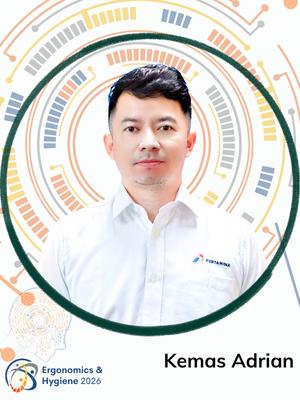
Kemas Adrian
Topic
Breaking Down HSE Silos with AI: A Real-Time Framework from Methane Leak Detection to Dynamic Health Risk Assessment
Session Description
Artificial intelligence can help bridge the gap between environmental monitoring and industrial hygiene in the Oil & Gas industry. Using methane leak detection as a case example, this presentation introduces a real-time framework that combines Quantitative Optical Gas Imaging (QOGI) with generative AI to translate methane leak rates into dynamic health risk assessments. The approach supports earlier risk prioritisation, better decision-making, and more proactive worker health protection, while complementing rather than replacing conventional monitoring.
Speaker Profile
Kemas Adrian is an experienced Environment Manager at Pertamina Hulu Indonesia, bringing over 18 years of extensive experience in the upstream Oil & Gas industry. His career has spanned major operators, including Total E&P Indonesia, Chevron, and Pertamina, with the last 5 years in managerial roles. He specializes in developing and implementing environmental management systems, regulatory permitting, risk assessment, and biodiversity management. His expertise also extends to critical HSSE domains, including industrial hygiene, process safety, and behavioural safety. Beyond his corporate responsibilities, Adrian is an active thought leader and speaker. He is a prominent voice on LinkedIn, where he shares professional insights with a community of over 61,000 followers, focusing on the professional development of younger workers and HSE topics. His work consistently integrates technical environmental engineering with strategic ESG initiatives to ensure sustainable business operations. He also actively speaks in various international conferences about HSE, ESG, and sustainability in the last 7 years.

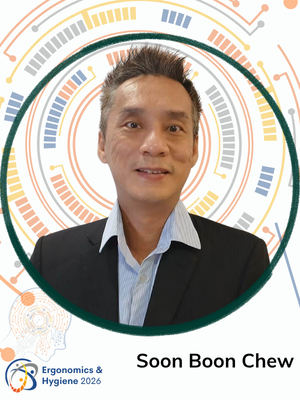
Soon Boon Chew
Topic
From Summons to Solutions: Humanizing AI for Workplace Safety & Health
Session Description
This session explores the balance between AI and HI (human intelligence) in workplace safety & Health. While AI excels at detecting unsafe behaviors, it misses the critical why—the underlying human factors that drive actions. Through real-world examples, we’ll highlight how over-reliance on AI can foster a compliance-driven culture rather than proactive safety. Attendees will learn how to bridge the gap between “Work-as-Imagined” and “Work-as-Done,” using AI data not just for enforcement but to spark meaningful conversations that uncover root causes. The goal is to shift from a compliance-based mindset to a proactive safety culture where workers are engaged and safety is something they want to practice. Key Takeaways: • Understanding AI’s limitations in addressing the human context behind unsafe behavior. • How to use AI data to drive proactive safety, not just compliance. • The importance of human leadership in creating a safety culture driven by ownership, not surveillance.
Speaker Profile
A practitioner turned consultant, Boon Chew served as the Regional HSE Head for Johnson Controls (APAC) before specializing in the “people side” of risk. With a dual MSc in Safety and Psychology, Boon bridges the gap between behavioural science and operational reality, helping organizations enhance safety through psychological insights. As a lecturer in Human Factors at the Singapore University of Social Sciences (SUSS) and the author of 7 Toolkits for Safety Practitioners, Boon advocates for psychological approaches that move stakeholders from “have-to” to “want-to,” fostering intrinsic motivation for safety. As a speaker, Boon excels at simplifying complex concepts and making them engaging and relatable. Through storytelling and evidence-based models, he provokes thought and inspires action.

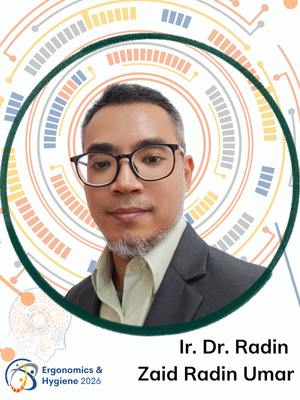
Ir. Dr. Radin Zaid Radin Umar
Topic
Operationalising Prevention through Design Using Human-Centered Dynamic Task Analysis Approach
Session Description
Despite strong advocacy for Prevention through Design (PtD), its practical application during the early stages of engineering design remains inconsistent and largely qualitative. This talk presents a human-centred approach to operationalising PtD, focusing on how ergonomics and human factors principles can be embedded more systematically into front-end engineering design decisions. The presentation introduces a dynamic task analysis framework that integrates human-centred design principles with emerging technologies such as virtual reality (VR) and motion capture. Instead of relying on static manikins and third-person visual reviews, this approach enables first-person, immersive evaluation of real task movements. This allows designers, ergonomists, and end users to collaboratively identify accessibility, clearance, and interaction risks before construction or commissioning. Drawing on applied research and industry case examples, the talk demonstrates how dynamic, technology-enabled task analysis can: Translate PtD principles into concrete design decisions; Reduce perspective errors during design reviews; Improve communication between engineers, ergonomists, and operators; and Support earlier, evidence-based risk elimination rather than relying on downstream controls. The session concludes by discussing implementation considerations, including when such advanced analysis is most valuable, how it complements existing design workflows, and its role in advancing measurable safety and health outcomes aligned with human-centred workplace innovation.
Speaker Profile
Ir. Dr. Radin Zaid Radin Umar is a Chartered Engineer (CEng, IMechE) and Chartered Ergonomist and Human Factors Specialist (C.ErgHF, CIEHF) specializing in Human Factors Engineering and Occupational Ergonomics. He is a Senior Lecturer at Universiti Teknikal Malaysia Melaka (UTeM), where he teaches and conducts research on human–system interactions, ergonomics in design, and workplace safety. Dr. Radin Zaid has over 17 years of experience in ergonomics research and industry projects across Malaysia, the United States, Indonesia, and South Korea. His work focuses on integrating ergonomics and Prevention through Design principles into engineering design processes to improve worker safety, usability, and system performance. He currently serves as Vice President II of the Human Factors and Ergonomics Society of Malaysia (HFEM) and actively collaborates with industry and regulatory stakeholders to advance ergonomics practice and research in workplace design and safety.

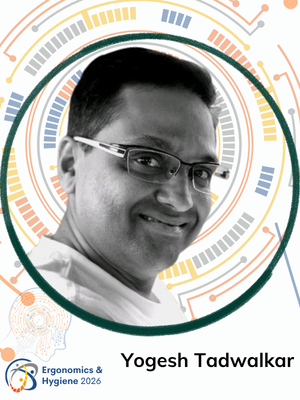
Yogesh Tadwalkar
Topic
Democratizing Ergonomics Safety: Leveraging AI to Bring Ergonomics Safety Across Geographies, Work Domains and Income Groups
Session Description
Musculoskeletal Disorders (MSDs)—including carpal tunnel syndrome, back pain, and tendinitis—account for nearly 40% of workplace injuries in Singapore and worldwide. MSDs remain among the top three occupational health burdens, according to the International Labour Organization (ILO). Yet, over 60% of employees globally lack access to ergonomics advice or care due to lack of awareness, extremely limited availability of ergonomics expertise and very high costs involved in engaging experts. The result? Employees suffer from poor health outcomes while businesses collectively lose an estimated USD 1.04 trillion each year, equivalent to 4% of global GDP, in direct and indirect costs linked to ergonomics issues. This talk explores a pressing question: Can thoughtful AI unlock a future where ergonomics health is accessible, affordable, and effective for all employees—while conserving precious economic resources? Through case studies and industry examples, the session will: • Examine the systemic and tactical root causes of poor ergonomics wellness, including unusable software, fragmented service design, limited access to ergonomists, and psychosocial barriers affecting adoption • Demonstrate how AI-powered tools and human-centered design can eliminate these barriers, creating a radically simpler, scalable, and practical approach to ergonomics risk management. • Show how combining professional ergonomics expertise, a robust knowledge base, and cutting-edge design principles can dismantle technical, social, geographical, and economic obstacles to care. In summary, the audience will see how a transformative blend of AI and human centered design can reframe ergonomics not just as an employee benefit but as a strategic investment in productivity, health, and social equity worldwide.
Speaker Profile
For over 20 years, Yogesh has worked extensively in the area of physical and cognitive ergonomics. A highly sought-after human factors expert who has been on retainerships of prestigious companies such as Apple, Meta, Google, and ExxonMobil, Yogesh has been consulting for fortune 500 clients like Microsoft, Dell, Intel, Sony, Samsung, British Petroleum and others. He specializes in workspace ergonomics safety and human computer interaction. Over the years, Yogesh has led more than 700 consulting projects across multiple domains including defense, manufacturing, oil and gas, banking, healthcare, logistics, teleco, retail and hospitality. He has also conducted over 250 training courses and seminars in Singapore and overseas for various private sector clients and government ministries on various human factors related topics. Yogesh has served as the President of Human Factors and Ergonomics Society of Singapore (HFESS) (2007-2013). He has also been a technical committee member of several government initiatives and international conferences. Yogesh was also the Vice President of Usability Professional’s Association (UPA), Singapore (2003- 2005). An ex-visiting faculty at the at National University of Singapore (NUS), Singapore University of Social Sciences (SUSS) and other educational institutions of repute, Yogesh has also been a regular trainer at various ministries of the Singapore Govt and polytechnics. Yogesh holds a master’s degree in Human Factors Engineering from Nanyang Technological University (Singapore). He also holds a certificate in Human-Computer Interaction (HCI) from Stanford University (USA). And the Advanced Certificate in Learning and Performance (ACLP) from Institute for Adult Learning, Skills Future, Singapore government.

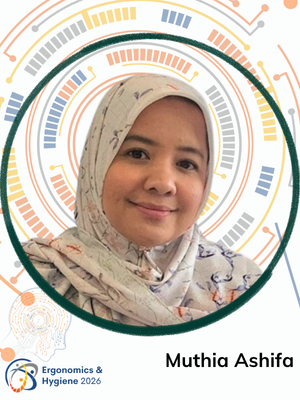
Muthia Ashifa
Topic
Human‑Centric Occupational Health: Leveraging AI for Better Outcomes
Session Description
TBA
Speaker Profile
Muthia is an experienced occupational health and safety (OHS) practitioner for 16 years in integrated energy companies (coal mining, oil and gas and mining services). Currently working at as SHE System & Compliance Department Head in one of Indonesian integrated energy producer company, based in Jakarta. Her previous roles were Head of Industrial Hygiene & Occupational Health (IHOH) Department, OHS Compliance Superintendent, QHSE System Superintendent, HSE Superintendent & HSE Officer in PT AEI.

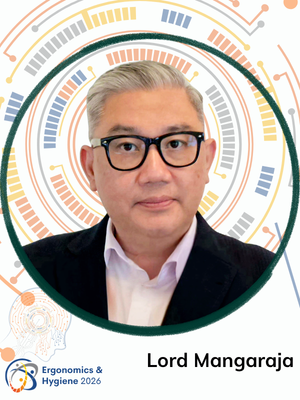
Lord Mangaraja
Topic
Blueprint for Impact: Merging Tech and Tradition in Workplace Health
Session Description
TBA
Speaker Profile
Lord Mangaraja is a distinguished Environmental, Health, and Safety (EHS) leader with over 25 years of experience driving regional strategy and operational excellence across the Asia-Pacific region. Currently serving as the Head of EHS for Malaysia and Sri Lanka at Ericsson, he oversees safety execution for high-tech infrastructure portfolios. A recognized technical authority, he actively collaborates with government bodies to shape industry policy, having drafted multiple regulatory standards and led working committees across the APAC region and beyond. He is the Chairman of the Telco Safety Leaders Forum (TSLF) in Malaysia and a founding member of several prominent EHS networks in Indonesia. He holds a Master’s in Management of Information Technology and a Bachelor’s in Environmental Engineering. His expertise lies in human performance, risk management, and institutionalizing proactive safety cultures within complex, matrixed organizations.

Zephan Chan
Topic
Navigating AI in Workplace Safety and Health: From Potential to Risk and Real Impact
Session Description
TBA
Speaker Profile
TBA

Alvian Tan
Topic
The Changing Face of Workplace Exposure: Occupational Hygiene in an Era of Emerging Risks
Session Description
The nature of work is being fundamentally transformed — and the risks that occupational hygienists are called to manage are evolving alongside it. From the health consequences of climate change and the hazards of new energy technologies, to psychosocial stressors, novel chemical exposures, and the rise of real-time digital exposure monitoring, the boundaries of occupational hygiene are being redrawn. This keynote takes stock of the emerging risks reshaping the profession internationally, examines their implications for industry in Singapore and the region, and makes the case for a new generation of occupational hygienists equipped with broader competencies, sharper analytical tools, and the confidence to influence decisions where it matters most — in the boardroom, at the design table, and on the ground. The question is not whether the profession needs to evolve — it is whether we are ready.
Speaker Profile
Alvian Tan is an Adjunct Assistant Professor at the National University of Singapore (NUS), where he teaches graduate courses in industrial hygiene and epidemiology as part of the Master of Science in Safety, Health and Environment (SHE) programme. In addition to his teaching role, he serves as a research mentor, guiding students in their academic research. Professionally, Alvian is the Senior Assistant Director of the Major Hazards Department within the Occupational Safety and Health Division of the Ministry of Manpower (MOM). He leads a multidisciplinary team to implement the safety case regime, focused on preventing catastrophic incidents at Major Hazard Installations. His extensive career in OSH encompasses occupational health policy development, specialist enforcement, applied research, and international collaborations. Alvian holds a Bachelor of Engineering (Chemical) and a Master of Science in SHE Technology from NUS, as well as a Master of Public Health from Harvard University. He is also a Certified Industrial Hygienist, demonstrating his commitment to excellence in the field.

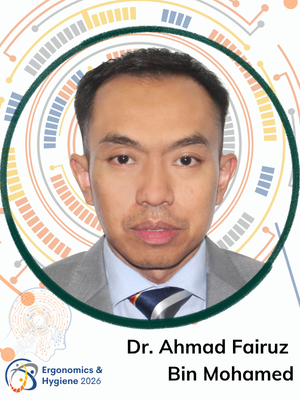
Dr. Ahmad Fairuz Bin Mohamed
Topic
From Observation to Prediction: Advancing Ergonomic Risk Assessment Using AI HAPO–LEA in Industrial Practice
Session Description
TBA
Speaker Profile
TBA
Dr. Miranda Loh
Topic
Occupational Health in Transition: Technology, Work, and Emerging Risks
Session Description
The world of work is rapidly changing through digitalisation, automation, artificial intelligence, and evolving employment models. At the same time, demographic shifts, ageing populations, and increasing workforce diversity are reshaping occupational health challenges. This talk will explore the current state of research into occupational exposures and health, given these rapid changes in the nature of work. It will explore emerging risks associated with digitally enabled and platform-based work, including mental health, sedentary work, surveillance, and changing patterns of exposure. The talk will also discuss the growing importance of the “working life exposome” as a framework for understanding cumulative occupational and environmental risks, and identify future research priorities for protecting worker health in a changing world of work.
Speaker Profile
Dr. Loh is an Associate Professor at the Saw Swee Hock School of Public Health at the National University of Singapore. Her research has included developing methods to characterize the ‘working life exposome’ using smart technologies, indoor air quality, personal level environmental exposures, and evaluating the effectiveness of interventions such as facemask or respirator wearing to reduce air pollution exposures. She has also been part of interdisciplinary teams using creative methods for engaging stakeholders and the public on environment and health issues.